The Un-damming of Elwha (Also By the River Elwha I Sat and Wept)
- May 27, 2015
- 3 min read

It is a story that caused my heart to wrench, to break. I’m already one of the biggest crybabies to begin with, dropping a tear at Subaru magazine ads. Watching the story unfold for the first time at the Banff Film Festival's world tour this year, I was a bawling mess.
I’m talking about a documentary (could very well be a documen-teary in my books) called “DamNation”, the premise of which is about the movement to tear down inefficient dams and returning rivers to their natural state, to resume their natural flow, instead of their choked up, restrained existence. Over decades of population growth, rivers were suppressed by building gigantic concrete walls creating “lakes” to produce hydroelectric power for industrialization. Good for commerce. Fatal for fish, wildlife, and rivers.
This is the classic story of how mankind intervenes with nature and throttles it. Salmon fascinate me, especially how nature works through them. They are born in rivers and after living most of their lives in the ocean, they make the heroic swim upstream (yes, up waterfalls, too) back to the river where they are born (some say, they could find the spot where they were born with much precision) so they can spawn and then die. With dams blocking their passage back to their place of nascence, they are hindered from continuing how nature designed their propagation.
Elwha and Glines Dams are a couple of those massive dams. Completed in 1913, they were built to create hydroelectricity to support industrialization and population growth in Port Angeles in Washington State, on the fringes of Olympic National Park. And by the way, 93% of salmon couldn't make it upstream of the dams since there were no fish passages created and 108 feet is too much to jump for these marvelous fish. They were pretty much SOL. (It took decades of activism, including a {heroic} vandalism of a couple of rocklimbers who painted a gigantic pair of scissors cutting through a dam in Ojai, California, to cause a ripple effect to fight for obsolete dams all across America to be torn down.)
On August 26, 2014, the last part of Elwha Dam was taken down. It is the biggest dam removal project in history. (This is also the part of the film where I just lost it.) Although some parts of the dam that don't obstruct the river remain, one can appreciate how the Elwha has finally run free after a century.
Over the long weekend, we were at Olympic National Park located northwest of Washington State to do some hiking. We were en route to the Hoh River Rainforest Trail, but when we saw signs to Elwha River, the choice was made for us. We had to divert our plans.
Catching a glimpse of Elwha River in person, flowing and obstruction-free, as you would imagine, drove me to tears. It gives me hope that if are able to hit ctrl+Z on restraining a river, maybe we stand a chance to undo global warming as well. Maybe.
It is moving to see life flowing in the Elwha again. The ecosystem is coming in balance. Native plants are resurging and is in the process of being restored. And those salmon, wild, brave, and magical, will one day, hopefully make a daring comeback.
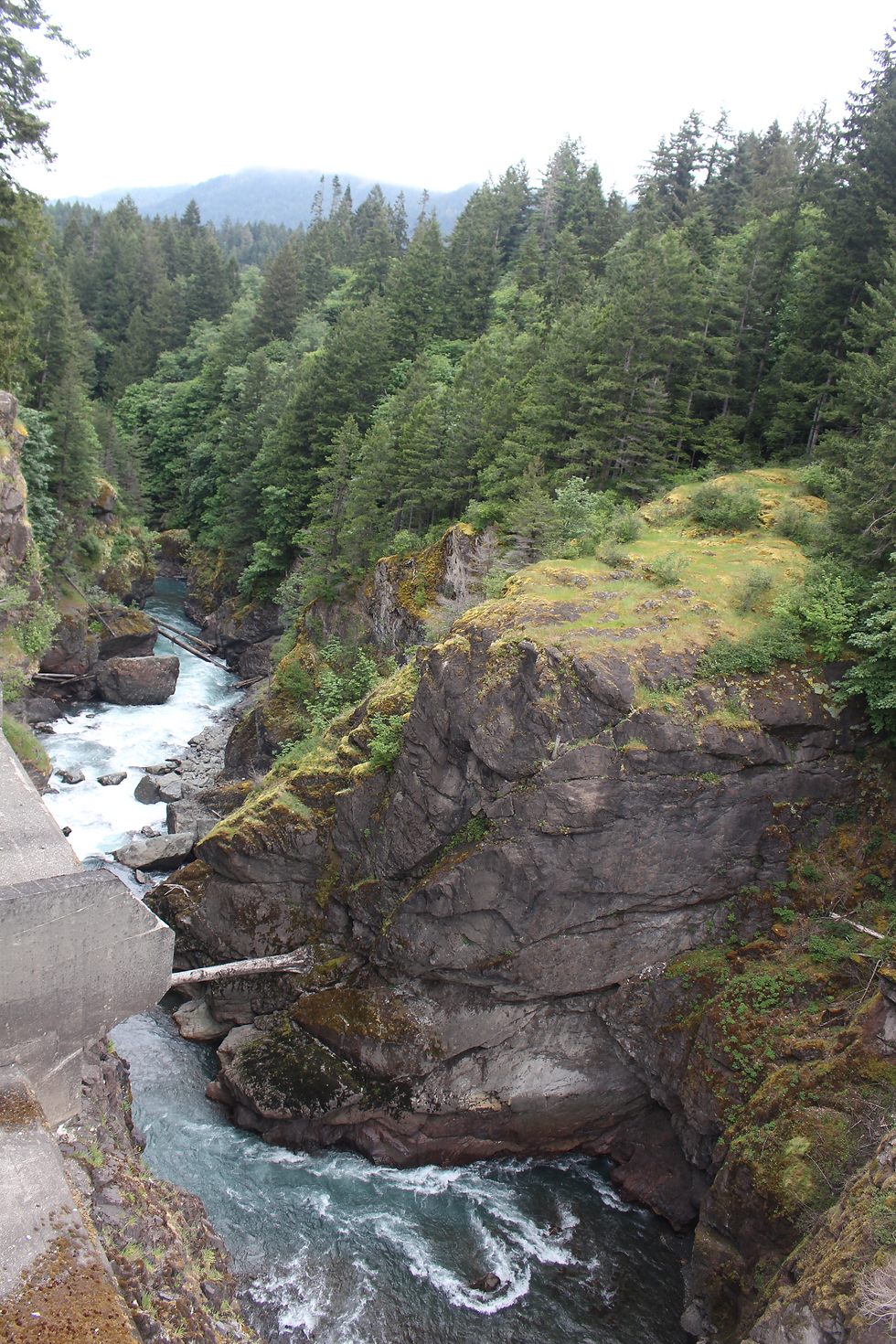


Seeing what I see and learning what I learn when I travel, I feel the responsibility to spread the word about things in the world that are destructive, and providing bits of ideas here and there of what we can do, regardless of how little or inconsequential our actions may seem, to chip at the problem. Education and awareness are baby steps and learning more about obsolete dams and the damage they pose to the ecosystem, might just lead to more rivers running free.
A few links to start:
1 DamNation, the film, is available on Netflix. Watch the trailer here.
2 If you're in the Washington State, there's a petition to tear down more obsolete damns. More information is here.
3 For more information about salmon and how farmed salmon in the BC area of Canada is potentially killing wild salmon, go here and here.
4 To learn more about salmon and the "race of their lives", watch a clip on National Geographic here.
5 If you're as fascinated by it as much as I am, there's a book called "Elwha: A River Reborn". It takes you to the history of the dam and the painstaking restoration efforts post-dam.


Comments