A Simple Guide to Cold-Weather Layering
- Feb 17, 2016
- 2 min read

You will hear me say this again and again, but bulky jackets don't mean squat. If you read my post on 10 Myths About Dressing for a Winter Adventure, you will read about how I get preachy that bulky and heavy clothing is actually not what you want to be wearing on a cold, wintry day outdoors.
So what should you wear if you can't wear your heavy parka and knit sweaters then? Effective, technical layers. I have made many mistakes on the trail that never ended up well (think misery, tears, wet clothing - I could bore you with all of them) so here's a simple a guide to how to layer for the cold weather. And the truth is - I apply the same technique when dressing for the winter in general, even when I'm not skiing or snowshoeing.
Some technical gear (but not all) can get expensive, although the really good ones are built to last a lifetime and come with guarantees. That means you only need to invest in one of each that you get to use and keep forever.

Typically, baselayers could be made of wool, silk, or some synthetic fabric. My personal favorite baselayer, though, is this Columbia stretch baselayer (pictured and linked here). I have had this for about two years and is one I wear practically every week in the winter. It has Columbia's "Omni Heat" technology, which is this reflective material on the inside that supposedly helps your body keep the warmth it generates.
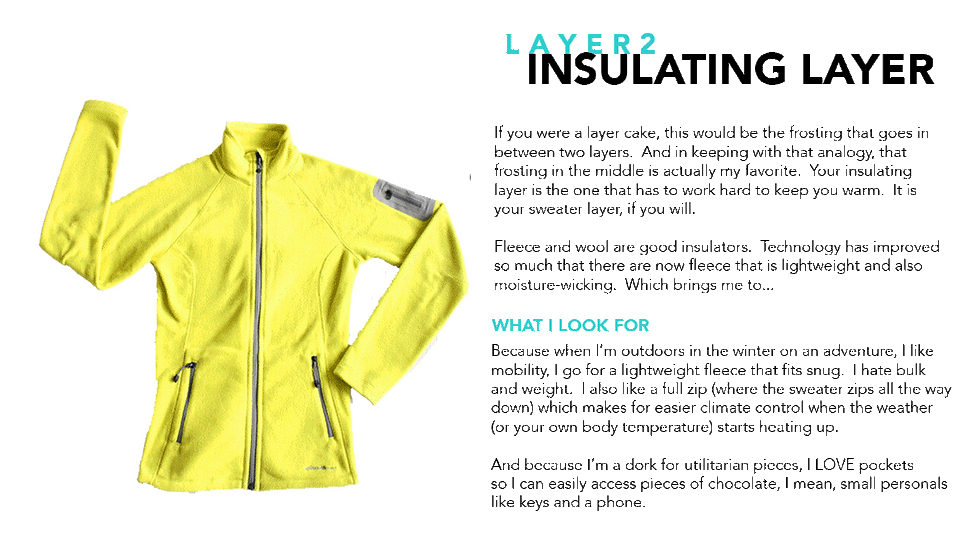
The one fleece sweater I live in all fall/winter long (me and The Dutch both, actually) is Eddie Bauer's First Ascent Cloud Layer Pro Fleece (linked here). First Ascent is their top-of-the-line, guide-built clothing. I cannot rave enough about how it insulates great without the annoying bulk. All Eddie Bauer apparel and gear is also backed by a lifetime guarantee, so anytime you feel like your gear has failed you, you can just return it to the store.

This winter, I tested a wool-insulated jacket (pictured above) by Icebreaker. Insulated with merino wool, it was attractive because wool is a more sustainable resource than the goose down used in some other jackets. While it worked well enough, I found the fit a bit awkward for my petite frame and although it did just fine for snowshoeing and skiing, I would admit that I missed the mobility offered by the right down jacket. So my favorite is still the Eddie Bauer First Ascent Micro Therm Down Jacket here. I've had mine for three years now (or is it more?) and I am convinced it is pretty much indestructible.
And there you have it - easy as 1-2-3! I've always wanted to encourage others to give winter a try and hopefully, this simple guide could help you brave the cold and get out on a winter adventure of your own!
And by the way, this is NOT a sponsored post!


Comments