Pilgrim
- Oct 17, 2016
- 4 min read
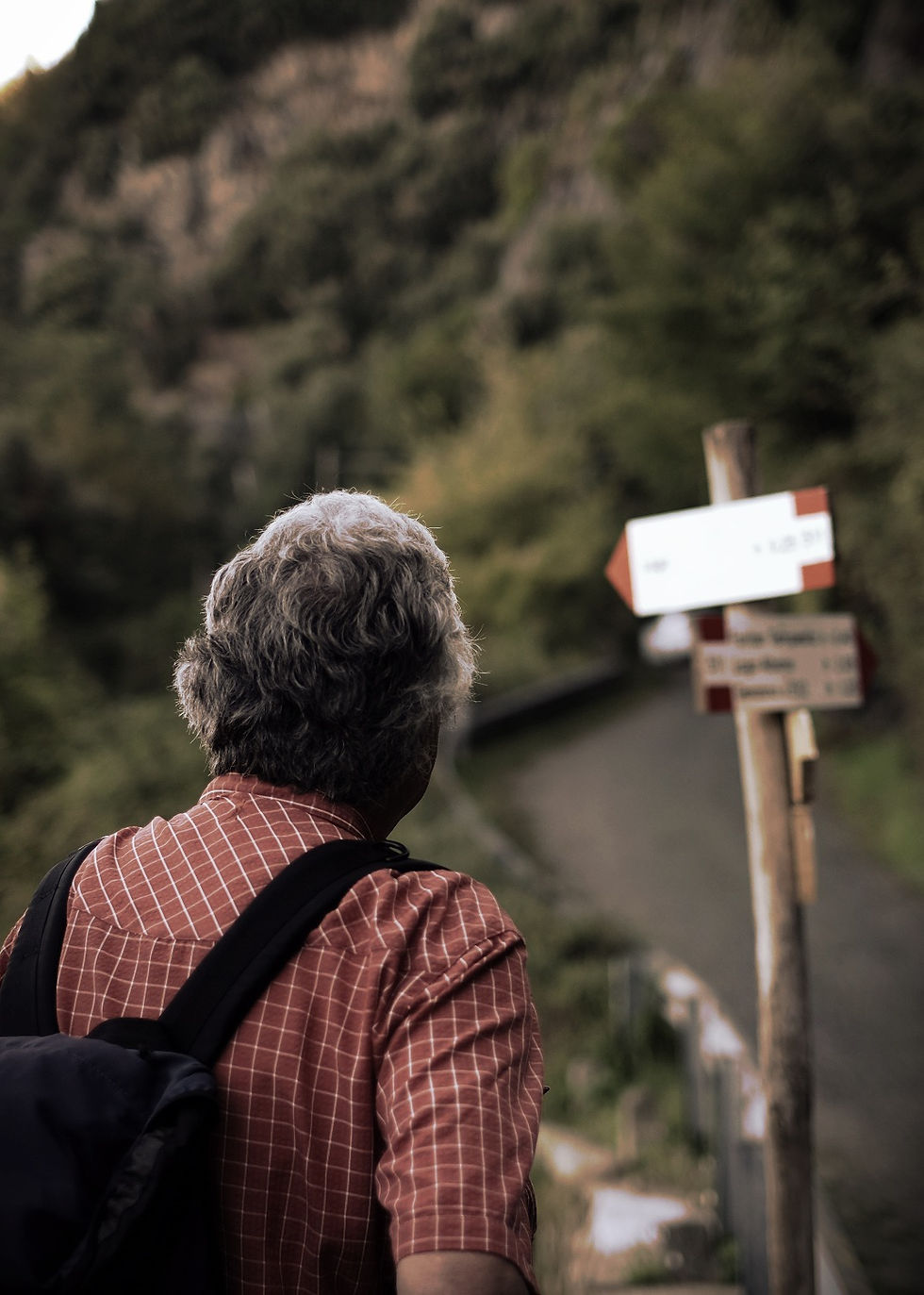
PILGRIM
ITALIAN WONDER WAYS SERIES
It had just rained. There is still a slow drizzle, but the clouds have sobered down. Although it has been a warm
couple of days in Italy and the cool breeze, especially here at the foothill of a verdant mountain, is welcome.
I inhale the heady smell of petrichor and I realize how long it has been since I smelled rain. I am
sitting on a bench, at first in silence, with a seventy-seven year old man from Holland.
Herman is rather remarkable - a man still vigorous at 77, has a full head of graying hair and a thick
mustache. He has a youthful laugh - full and unbridled that joggles his cheeks and his belly.
He has a slight limp on his left foot, a result of a small accident a couple of weeks before he
was scheduled to leave for Italy. The doctor told him not to go. He went anyway.
We had been traveling together, along with ten other compatriots from all over world,
to retrace some of the pilgrims' paths in the Lazio Region of Italy. It had been a hectic
couple of days, but here at the San Magno Monastery at the base of Monte Auson
close to the town of Fondi, we find silence.


Herman is not new to pilgrimages. In 1989, he embarked on a solo pilgrimage on foot that would take him 1,250 miles from Holland to Rome, and then nine years later, 2,200 miles from Rome to Jerusalem in 1998. The journey to Rome from the Netherlands took two months of walking, and from Rome to Jerusalem close to four months.
Now let that sink in for a moment. Rome to Jerusalem on foot*.
(*except for a boat to cross from Bari in Italy to Greece)
It is like hiking the Pacific Crest Trail from Mexico to Canada or the Appalachian Trail on the east coast from Georgia to Maine, but instead of crossing states, one crosses Southern Italy, Greece, Turkey, Syria, and Jordan to Jerusalem.
Herman's pilgrimage to Rome was inspired by a Dutch poet named Bertus Aafjes, who in 1936, embarked on a walk to Jerusalem and wrote about it in a book of poetry that would be published after World War II, "Een voetreis near Rome" ("A Foot Trip to Rome"). Herman came in contact with Bertus Aafjes and would recreate his voyage to Rome, but also walk from Rome to Jerusalem nine years later.
The importance of this kind of journey is emphasized if you contemplate that this was before the advent of Google maps and iPhones. Reliance on paper maps and the humanity of strangers at times to find a place to sleep. Herman would recount how he met a solitary monk in the remote mountains of northern Greece and how they would philosophize about life and its meaning. He remembered the journey through Aleppo in Syria and with a sad look, speak about how it was a beautiful and peaceful country then. That faraway memory of a country torn and turned inhospitable towards its own citizens breaks his heart.

The reason for a pilgrimage doesn't need to be religious, and to reduce a pilgrimage to an
"adventure" may not be giving it enough soul and justice. While a pilgrimage doesn't have to
have religion attached to it, I think regardless, it is a spiritual and very purposeful journey
hinged on faith and trust - in yourself, in the kindness of others, in the hope that in the end,
regardless of the distance and the challenges, you will persevere.
I'm new to the culture of pilgrimages in general, but in the few days in Central Italy
that we have been on the pilgrim route, people have treated us with extraordinary
kindness, hospitality, and humanity. And I suppose this is true for the thousands
of pilgrims who have passed through the Via Francigena pilgrim trail in this region.


Any form of long distance walking for days and days is an ambitious feat
that is worthy of respect. It is worth noting, however, that these pilgrimages while similar to long distance hikes as the PCT in some respects, one doesn't need to backpack
per se and rely on dehydrated food. There are established villages around the trail
to rest your head at night, and outstanding regional Italian food and wine to rejuvenate you.
And in places such as Monastero San Magno, an austere and beautiful structure
on the trail, pilgrims are welcomed openly and warmly. It is a refuge from the heat
or the rain. It provides rest and food to the weary pilgrim.

Perhaps we all share this as humans: the feeling that we are constantly in search
for something. The essence of a pilgrimage is the quest of the pilgrim to touch
that something - redemption, healing, solace, silence. And this is why I believe
that there is a pilgrim in all of us, regardless of religious background, because
this real desire to find that truth, that wholeness, that happiness, is all in us.
Don't we all have a little bit of Herman in us?

IF YOU GO
You can certainly walk from Rome to Jerusalem like Herman did, although going through Syria might present some security and logistical challenges. However, there is a multitude
of established pilgrim trails in Central Italy called Italian Wonder Ways that vary in distance
and difficulty. The trails are in the regions of Lazio, Tuscany, Marche, and Umbria, and if you
know Italy as much as I do, the people, the gastronomy, and the scenery, make the
The beautiful Monastery of San Magno, featured in this post, is in the Via Francigena South
route located in Fondi. More information on Monastery San Magno here.

Disclosure: I was a guest of Italian Wonder Ways and Visit Lazio during this trip, but all opinions
in this and in related posts are my own.
SaveSaveSave
SaveSaveSaveSaveSaveSaveSaveSaveSave


Comments