Italy Food Tour: The Story of Parmigiano Reggiano (a.k.a Parmesan Cheese)
- Feb 25, 2015
- 3 min read
To experience Italy deeply, we made every conscious attempt to discover the countryside. Italy has astounding history, architecture, and art deeply rooted in religion that we discovered in Rome and the Vatican. But we were also hungry for the other facet of Italy’s national treasure –its food.
To trace the roots of the extraordinary Italian cuisine, we embarked on a road trip that would take us through Tuscany, and then north to the Emilia-Romagna region, patrimony and birthright of some of the best in Italian gastronomy. Here’s a smattering of the heavyweights that you would find in Emilia Romagna and its surrounding hills: Parmigiano-Reggiano (parmesan cheese), balsamico di Modena (balsamic vinegar), Prosciutto di Parma (Parma ham from, well, Parma), and Bolognese (a specialty of Bologna which is a meat sauce).
By sheer coincidence, we were linked to Enrico, an affable middle-aged ball of Italian who bosses everyone everywhere we went. We met him the previous night over dinner as he scowled and scolded about how I’m cutting my tagliatelle wrong (to my defense, I just learned that evening). The following morning, we were handing him the keys to our rented Fiat 500. Bossy. I told you.
His English was as bad as our Italian and at times we would meet at the middle ground which was Spanish. He would drive us all around the hills of his home Regnano, deep in Emilia-Romagna where parmesan cheese is as, if not more, valuable than gold.
Enrico himself was a cheesemaker for the forty years before he retired. He is legendary in that he has perfected making parmesan cheese, especially since he clocked in about 14,600 days towards this alchemy. For the rest of that day, we would see Emilia-Romagna in his eyes - a local who also happens to have the reputation of being the local “King of Cheese”.

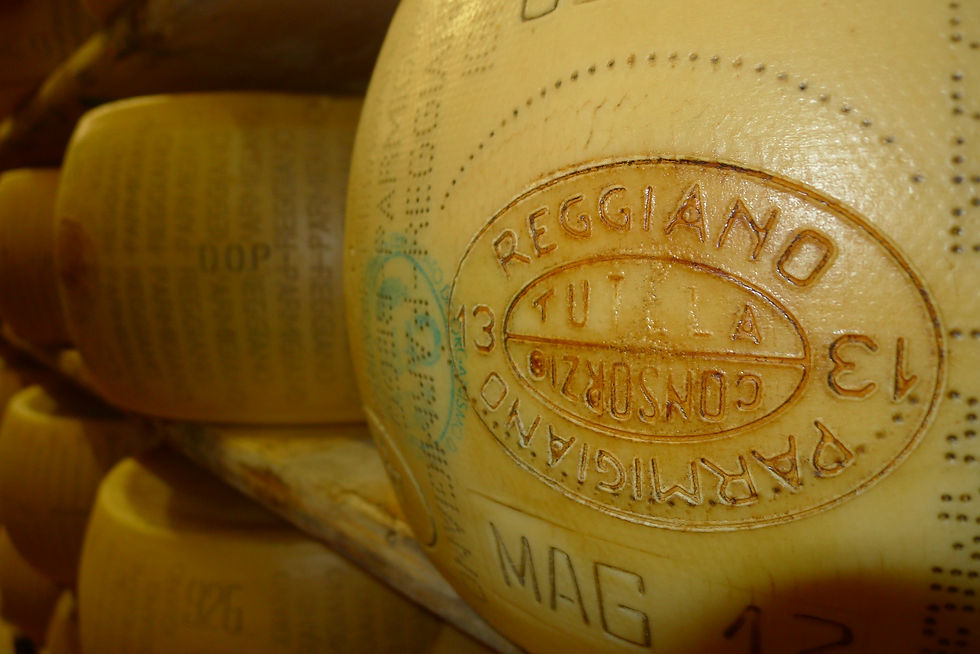
We spent the morning learning about the origins of Parmigiano Reggiano at a small family-run cheese production. Everyday, without fail, milk from local cows who feed on local grass (this is key) is made into the world-famous parmesan cheese. Their milk is heated and stirred in huge vats where enzymes are added. When the perfect consistency is reached (Enrico knows by studying and feeling the curds with his bare hands), the solidifying mixure is then taken out and slammed into a mold. They are given a salt bath and then aged for months in shelves, being turned on schedule to get the moisture distributed and to prevent molding.


The best part of the morning was when The Dutch and I were invited to the office and each given plastic cups of prosseco homemade by Paolo, the current cheesemaker who apprenticed under Enrico before he retired. Prosseco for breakfast, before 10am – this is Italy, after all. We then shared Parmigiano Reggiano with some fresh bread, followed by more prosecco, and then punctuated with espresso.
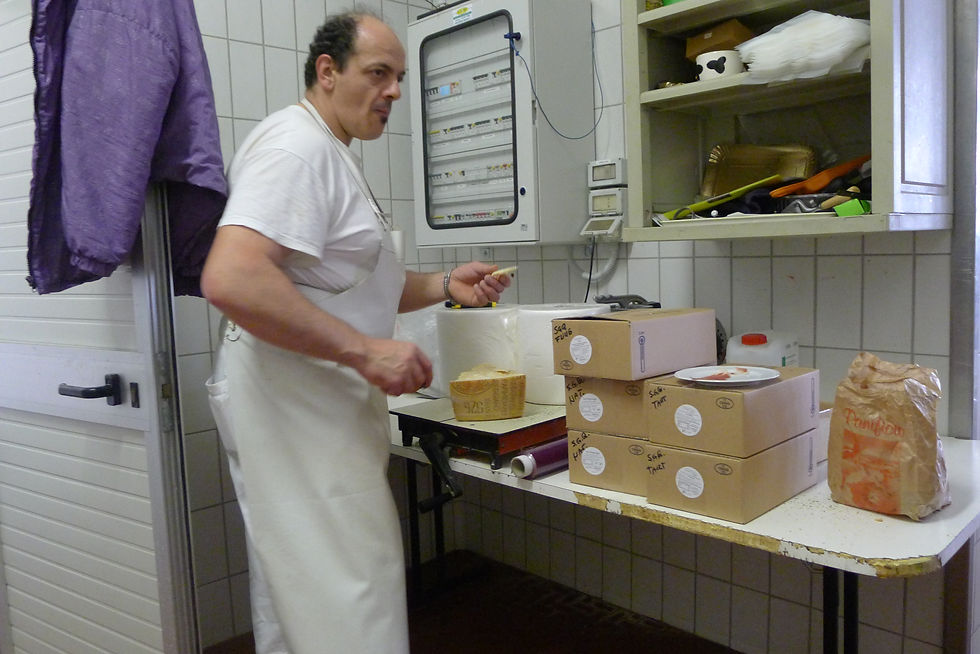
It is surprising how a small family-run operation of three people deep in Italy’s heartland could churn so much cheese enough to fill a massive warehouse with millions of euros worth of this precious commodity. I didn’t realize that cheesemaking is such hard, manual labor and the people who do it do it for a purpose greater than money. It is belonging to that process of national pride and keeping a heritage alive. In the age of machinery replacing people, I am in the view that people who keep technology at a minimum in respect of tradition should be awarded national hero status.
And when that golden piece of creamy sliver caresses my palate, my sensory experience is heightened with knowing that behind that simple slice of cheese, from a continent away in an obscure and verdant hilly area of Italy somewhere, is pure alchemy.


Comments